It’s true that we have deeper access to wisdom in nature. Gardening has definitely taught me that hard work is always available and certainly not without value. Doing things the hard way makes us wiser- tired people become inventive if the work still isn’t done.

So here are some thoughts that maybe work for you like they work for me:
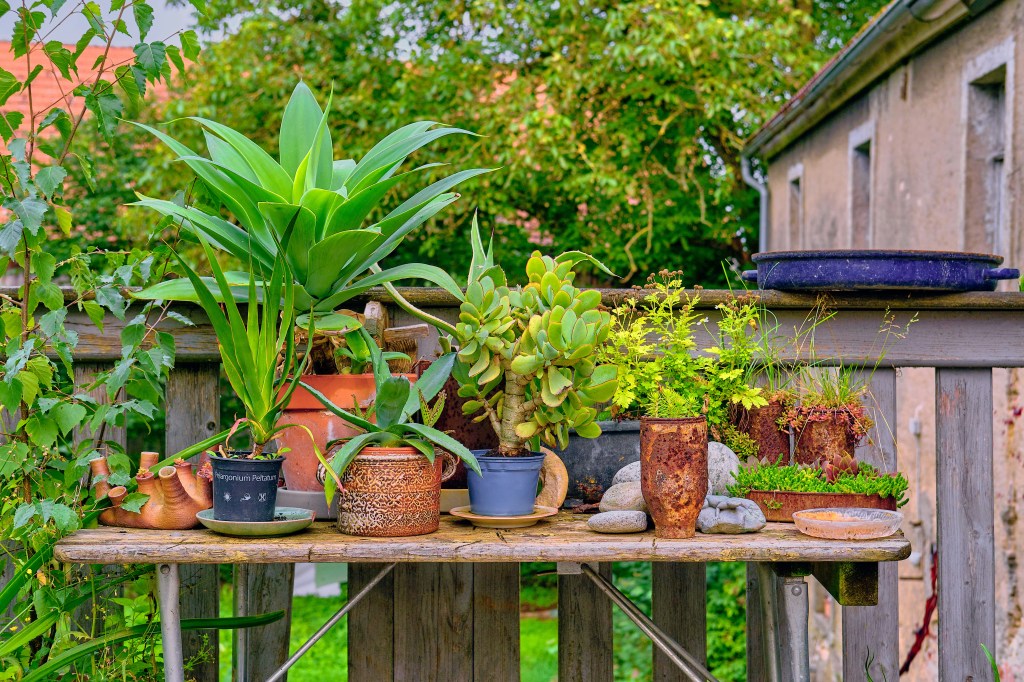
Mulch like crazy. Lots of mature horse manure or cow manure ( I like a good mixture) will make the ground soft and crumbly and it holds the moisture so very well. Add a good thick layer of wood chips. This keeps the ground moist and allows all the bugs and bacteria breaking down beneath the surface to proceed undisturbed. It slows down the temperature changes here in the mountains. The warmth of the sun is held in the ground and the chips through the night so it evens out better and things grow. Don’t run heavy equipment over the ground. Don’t walk all over it all the time. Don’t let the horses or the goats run all over it and pack everything down. It helps if you put a barrier around it. A good fence is a great asset.
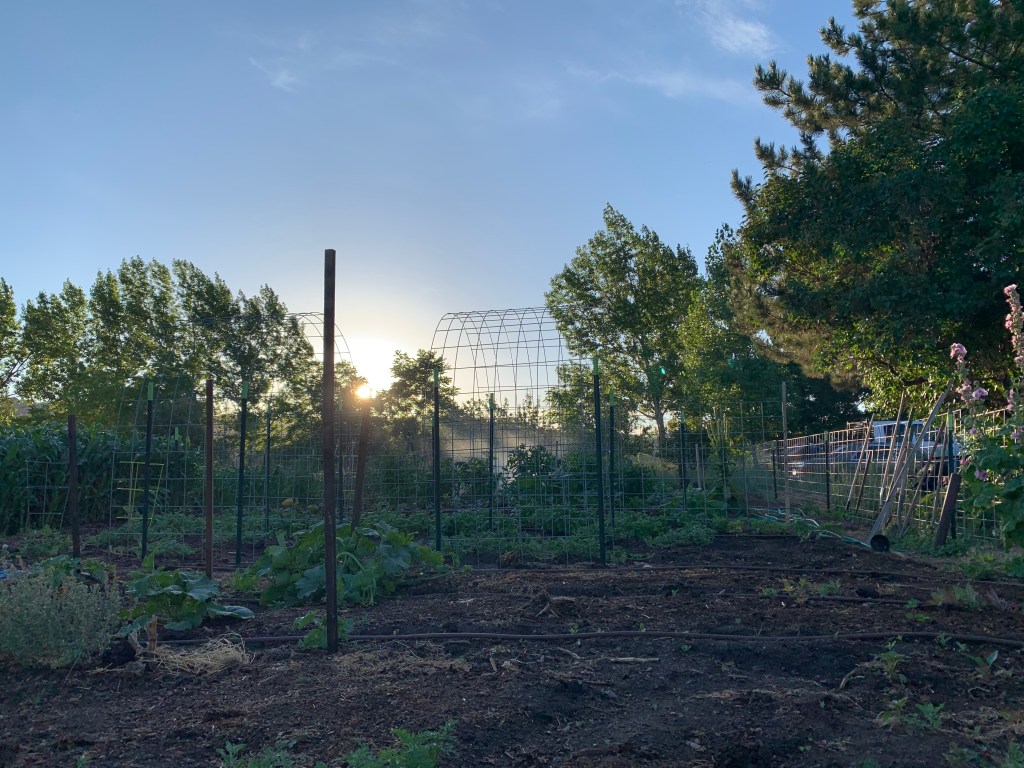
Water before you weed.
You can dig and pry and yank and pull but a strong root in hard and dry ground is mighty hard to dig out. Water it and the job gets a whole lot easier. A big rain storm is even better. I couldn’t tell you why rain is better than a sprinkler but it is.
Wait until the weed is either big enough to identify for certain or be super familiar with what weeds grow in your area because many plants look the same when they are very small. Don’t pull a beautiful flower out on accident because it looks a bit like a weed in the beginning. It’s easy to get it wrong.

Mow or pull weeds out around the perimeter. The weeds on the outside of your garden will get some of the water intended for your plants. It also rains out there too. The large weeds close by will drop seeds into your lovely space and cause you issues. Keep them back from the garden.
Don’t just look at the weeds. When you are in the garden, look at the beautiful plants, feel the breeze, feel the sunshine and the rain. Look at the sky and the clouds. It’s not just a job or a chore, it’s an experience. Don’t rush through and run on to the next things. Take the time to notice, appreciate and slow down.
Parenting and shepherding friends and neighbors is very much like gardening.
Feed the soil, give your life experiences and hurts and challenges and observations a chance to break down into beneficial food for your children or those needing your love. All those experiences have taught you valuable lessons that will bless them. Take the good stuff from the manure and let it feed the ground. Don’t pile it on hot and new- you’ll burn the plants and make everything stink. Let your kids and friends have the benefit of processed crap, don’t dump it on them and expect them to fix it for you. Keep your compost pile and your garden is separate locations.
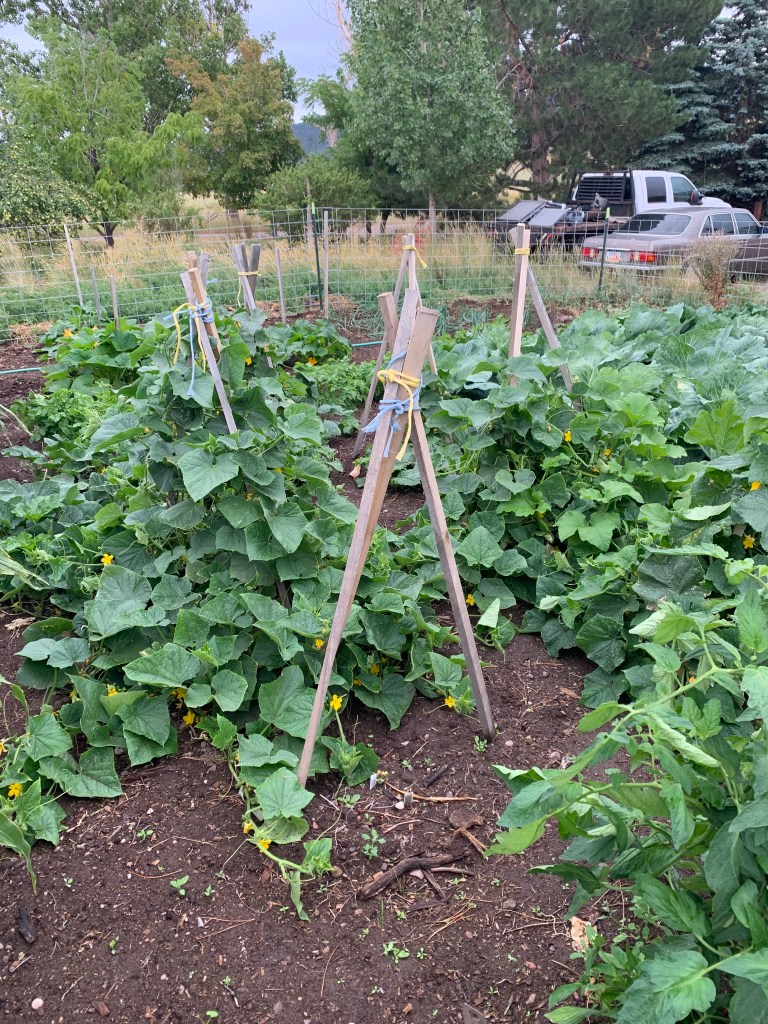
Pile on clean bark mulch- good daily activities that insulate and protect the ground. Read aloud to your family from great books. Feed them dinners together. Feed them breakfasts together and if lunch is separate send them a kind note with their lunch or shoot them a text to see how they are. Play games together. Have little rituals and inside jokes. Belonging somewhere safe makes kids feel strong and brings confidence over time.
Walk carefully in your home. Don’t be stomping all over and demanding that people do and be what you say. Show more than tell. Notice when they are doing well, doing what is asked and walk softly even when they are not. Don’t leave your boot prints all over their efforts. Watch them and learn what is unfolding. Notice and ponder. Don’t let other people trample on what your home is trying to grow. Have good boundaries. Not everyone has the right to enter, not everyone has a right to the time and attention of a family. Sometimes people will interject themselves into your time, demanding that their ways be recognized and honored. You must kindly, gently and firmly let them know that they don’t decide those things in your home or garden. If kind and gentle doesn’t work then by all means, bold and insistent is necessary.
When you see that something is happening that isn’t good with your children, your spouse, your family life- water before you weed. Maybe there has been some neglect of some important things. No one is perfect. Moisten the ground before you try and correct the mistake. Recognize that the first mistake is likely yours. As Mike Rowe reminded a talk show host who was criticizing the next generation, “We are the clouds those snowflakes fell from”. If we have neglected to listen and love our children they will show it. If we have missed their needs in our own busyness, we need to recognize that. Before we jump right to “character failings of our child” we must look to our own. They learned some of that somewhere and we are the closest somewhere. This is not to shame and cause you to feel even worse. You probably learned it somewhere too. It’s less helpful to blame and more effective to take ownership of what you can do now with God’s help. This is the simple matter of changing the most effective things first. You can’t force your child to change. You can choose to change yourself. More is caught than is taught. Children aren’t looking at us with experience and saying “Wow, I think of all the people in the world and the ways they choose to handle things, I’m going to do what this guy/gal is doing because it makes the most sense and gets the best results!” They are looking at the closest example and doing what they see. They have no idea that there are better ways out there. They haven’t been out there before they are aged five and most of our perceptions of how things should be done are gained before that age. Then we spend the rest of our lives checking and adjusting. If your child wasn’t given a perfect example of how to be, now is the best time to show them that imperfect people need salvation and how to find it and use it. Teach them humility and how to apologize. Teach them that you should seek to know better and when you know better, to do better.
Water with words of encouragement, with example, with love, with kindness, with acceptance of the person and recognition of their divine origin. Remind them that God loves them. This doesn’t mean that you reinforce bad behavior or teach them that bad is good. This means that you don’t tie love to performance according to your standards. We aren’t talking Pavlov here. Do not reward the good behavior and withdraw the love when bad behavior happens. If you do this, you will teach them that love is conditional and that if they don’t feel loved that means they aren’t good enough. Forgiveness allows us to love the sinner and not reward the sin. Show your kids that you see that you are a sinner, show them that you recognize that God loves you and will help you every time you turn to Him. Show them that you gain strength to do right by inviting God to lift you and that it isn’t based on your performance, but by God’s love and grace, freely given. Love and Trust aren’t the same- show them that God doesn’t give us trust to perform miracles in his name when we are not walking in his path, but he gives us miracles in our lives to overcome. Let them see you walk in God’s path and ask God to give you the unconditional love for your kids when they are stressful and frustrating to you. You will do it wrong, change and ask for divine intervention to get it right and give God the credit for the triumph that comes.
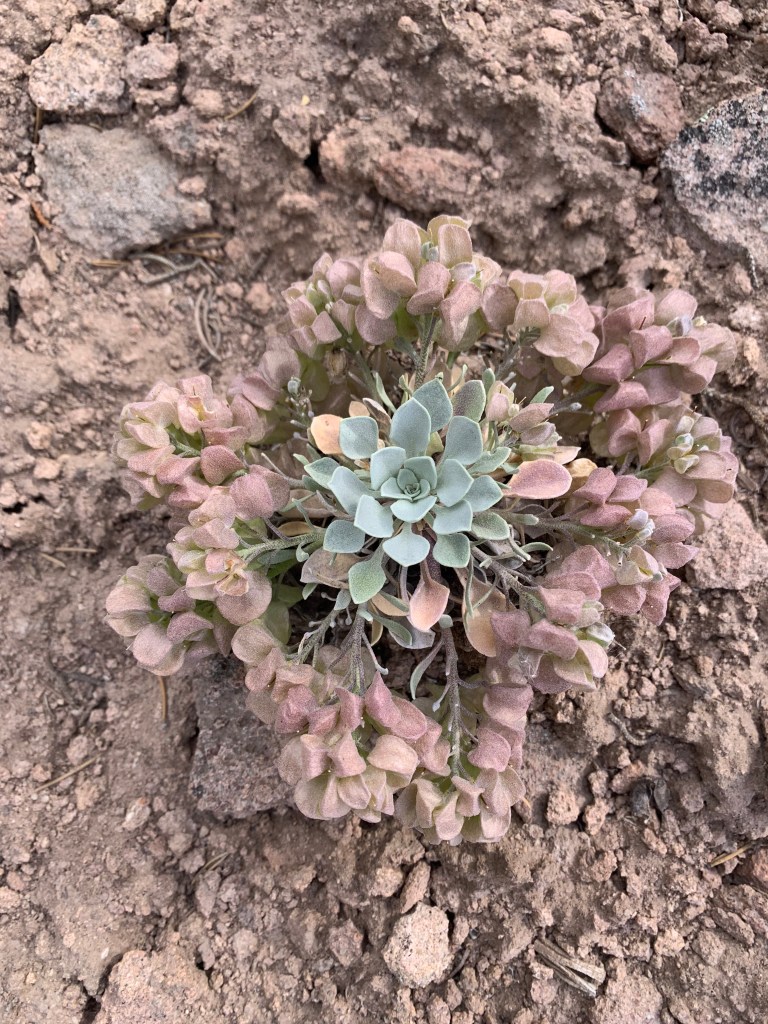
Know the weeds that grow in your garden. Know the temptations that are common to man. Do not freak out about their existence. Do not be surprised to see that your child is tempted to lie, steal, cheat, exaggerate, dump things where they don’t go, leave important things undone, ignore you when you speak, and any other of a host of behaviors that frustrate you. Satan tempts man in the same pattern and has since the beginning of time. Do not overreact to the normal progression of humanness that your children display. Certainly take action to recognize the motivation that they have for doing these things and the incorrect understanding they may have picked up someplace (You, potentially) because it isn’t the lying that needs to be rehashed so much as the things that happened before the lying needing to be understood. Label the behavior so that it’s clear what has happened. “That is not what has happened. You said something that isn’t true to get out of the consequences or to get something, that’s called lying” Help your child recognize that his or her desire for the things or the need for validation or the fear of being in trouble was where the problem started. You might also recognize that you missed their need to be seen, heard, helped, or reassured of your love and positive regard. You may need to point out other ways to get their needs met in a healthy and safe way. All of it starts with listening and trust. They may not trust you enough to tell you why they did what they did. You may have to rebuild trust that has been lost through your own busyness or lack of awareness. You might have to acknowledge that you have been a bad example of lying- believe me, kids will know when you tell the policeman that has pulled you over that you didn’t know that you were speeding when they know that you did, in fact, know you were speeding. They see and do what we do.
What you are seeing as a weed that needs pulled may be a great quality that needs proper food and direction. Do not pull out every “problem” that you see with gusto and announce to everyone that you have fixed it. You may have pulled out a flower that hasn’t matured yet. Be very careful that you are not overzealous in your “management” of children. Give them love, good food and sunshine and let them be who they are. You may be a rose and sunflowers don’t look like you think a flower ought. God gives us children that are not like us- it helps us not be narrow minded control freaks.
God gives us so many blessings to enjoy. Our lives can be an exercise in frustration where we focus on how hot it is, how hard the work is, how long it takes for the results to show that we are working for, how little cooperation and help we are receiving from others and how the plants aren’t staying within the plans we drew up. We have the choice to do life that way.
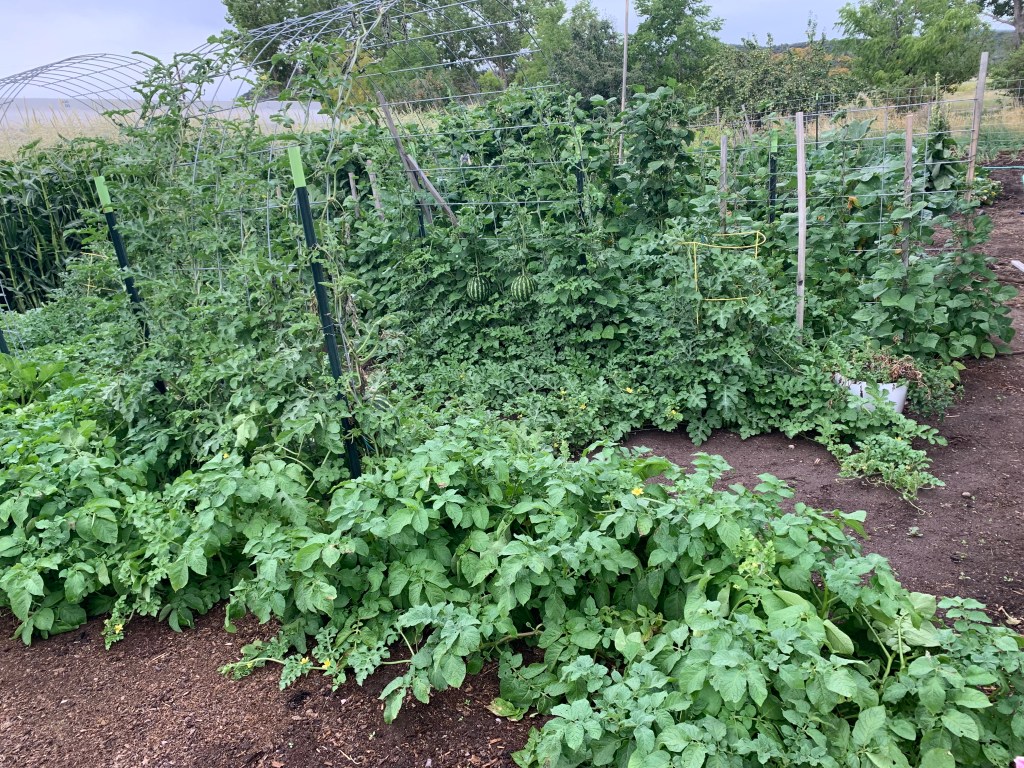
The blue sky, the beautiful clouds, the amazing lightning and thunderstorms, the gentler rains, the vivid colors of roses, pincushion flowers, daisies, the deep green of the spinach and the blue dusty coating on kale, the ripe tomatoes that have a deep red, the smell of the fresh dug dirt and the beautiful patterns on the leaves are all there the whole time and if we are still enough to notice them they reward our efforts in a hundred different ways. We can teach wonder and gratitude in the same exact circumstances, not ignoring the challenges or dismissing the hard things and disappointments but accepting them as part of the experience. The hard is worth noticing, just not worth giving the entire stage to.

 Strong Moms
Leave a comment